A Comprehensive Guide to Motorcycle Laws in France
Key Information Riders Need to Know About Licensing, Equipment, Road Rules, and Penalties
Riding a motorcycle in France is an incredible experience, from scenic alpine roads to coastal highways. Just one reason why we chose France as the base for all of Guide My Ride’s guided motorcycle tours.
To ride legally and safely, motorcyclists must understand the country’s comprehensive set of laws governing licensing, equipment requirements, road behaviour, fines, and safety standards. Whether you’re a French resident, a foreign visitor, or planning to move here, this guide breaks down the motorcycle laws in France in detail.
Motorcycle Licensing in France
In France, operating a motorcycle legally starts with having the correct class of driver’s licence. There are several categories based on engine size and power:
Licence Categories
(AM) Licence – For mopeds and scooters up to 50cc, accessible from age 14. It includes a theory test and practical training.
(A1) Licence – For light motorcycles up to 125cc (11 kW) from age 16.
(A2) Licence – For riders 18 and over, allowing motorcycles up to 35 kW (47 horsepower).
(A) Licence – Full motorcycle licence with no power restriction. Riders can get this from age 24, or earlier if they’ve held an A2 licence for at least two years.
Each licence level requires specific training and exams — both theoretical and practical — as regulated by French law. Fines and serious penalties apply if you ride a motorcycle without the correct licence.
Mandatory Protective Equipment
France has strict rules for motorcycle safety gear. These laws are designed to protect riders and ensure visibility on the road. Certified helmets and gloves can be rented with Guide My Ride’s motorcycle rental partner in France. Our motorcycles for hire are also maintained and equipped to the legal standard.
Helmet
Wearing a properly homologated helmet is mandatory for the rider and any passenger. The helmet must:
✔ Be fastened securely
✔ Meet European standards (e.g., ECE 22.06)
✔ Include reflective elements for visibility
Failure to wear an approved helmet can result in fines up to €750 and loss of 3 licence points.
Gloves
Certified motorcycle gloves with CE protection are legally required for both rider and passenger. Riding without certified gloves can lead to fines up to 450€ and 1 point off your licence.
High-Visibility Vest (“Gilet Jaune”)
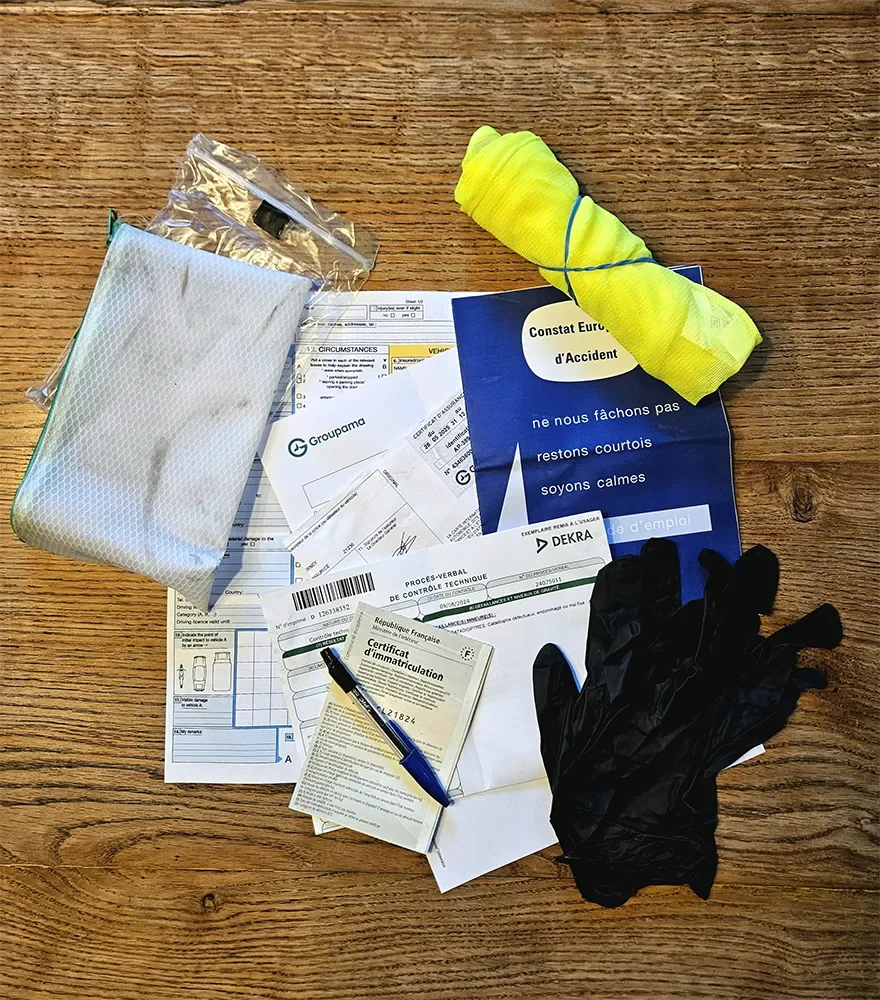
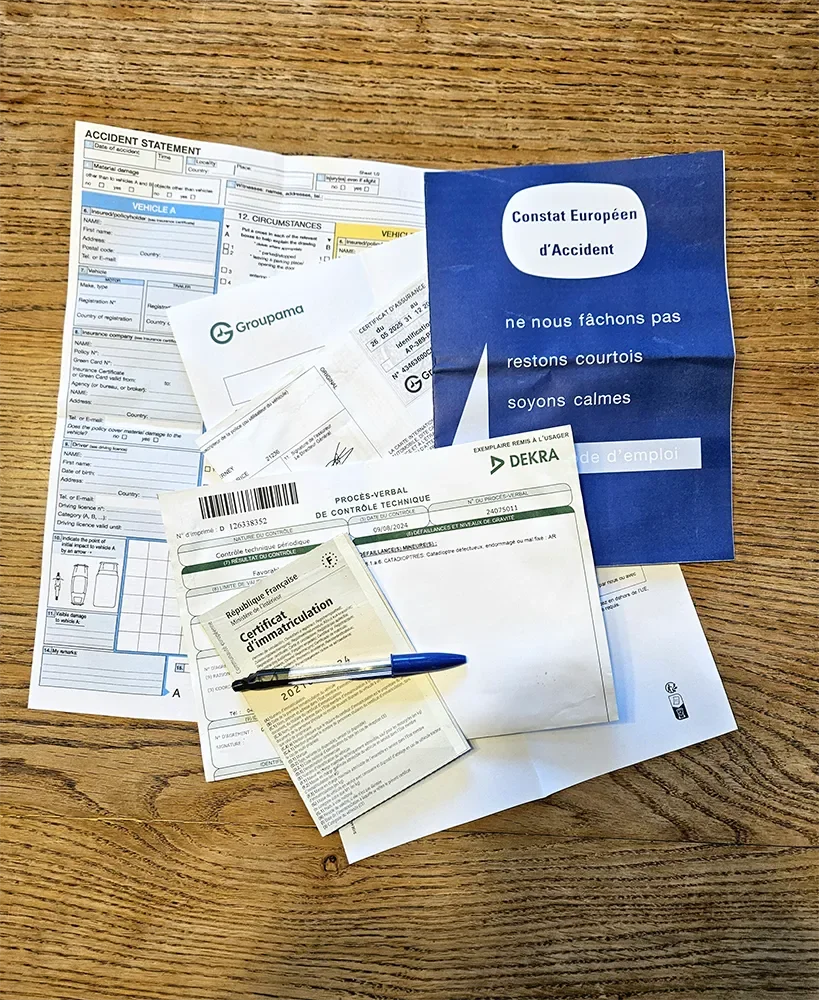
You must carry a CE-certified high-visibility vest on your motorcycle. It must be worn if you stop on the roadside in an emergency situation. Failure to wear a high vis vest in this scenario or to carry one can result in a fine of up to 750€.
Other Mandatory Equipment
Your motorcycle must be equipped with:
Fully functioning lights (headlights, taillights, indicators)
A working horn
A properly homologated exhaust system
Failing to maintain required equipment can lead to fines and vehicle immobilisation orders.
Road Rules & Behaviour — What’s Legal & What’s Not
Understanding safety and motorcycle laws in France is a priority for our expert guide, Robyn, founder of Guide My Ride. Each day of your guided tour begins with a safety briefing, including a recap of the French motorcycle laws, specific route hazards, signalling and emergency procedures.
Here’s an outline of some of the specific road laws for motorcyclists in France that our safety briefing covers:
Standard Road Regulations
Motorcycle riders on French roads must obey the same general traffic rules as cars — including speed limits, signals, and priority regulations. Common violations like failing to signal, exceeding speed limits, or unsafe lane changes carry fines and possible point deductions from your licence.
Lane Filtering (Circulation Inter-Files)
One of the newest motorcycle laws in France is about lane filtering, known locally as circulation inter-files:
✔ Officially legal when done correctly
✔ Only on roads with a speed limit of 70 km/h or more
✔ Maximum filtering speed: 50 km/h
✔ If traffic is stopped: max 30 km/h
This practice lets riders move between slow or stopped traffic lanes to ease congestion — but do consider these rules and restrictions to avoid penalties.
Mobile Devices and Audio
Holding a mobile phone or listening to audio devices while riding is prohibited unless the device is integrated into the helmet system. Violations result in fines and loss of licence points.
Safety and Distance Rules
Motorcyclists must also follow rules about safe following distances and proper positioning on the road — overtaking on the right (undertaking) is illegal except under very specific circumstances.
Fines and Penalties
Understanding the penalties helps you avoid costly mistakes and maintain a clean driving record. Here’s a brief summary of fines and points you may incur if you don’t adhere to the motorcycle laws in France:
Infraction: No helmet or non-homologated gear
Typical penalty: Fine up to €750 & -3 points
Infraction: No gloves
Typical penalty: Fine up to 450€ & -1 point
Infraction: Not carrying or wearing a high-visibility vest (in the case of an emergency stop)
Typical penalty: Fine up to 750€
Infraction: No insurance cover
Typical penalty: Fine up to €3,750 & license suspension
Infraction: Lights not functioning correctly
Typical penalty: Fine up to 450€
Infraction: Excessive speed
Typical penalty: Fine up to €135 & -3 points
Other serious offences, including riding under the influence of alcohol or drugs, or riding without the correct license, can incur criminal charges, jail time and license revocation.
Guide My Ride takes a serious and non-negotiable stance on such offences, which can put both riders and other road users at risk. Guide My Ride reserves the right to cancel or suspend a tour as a result of any illegal behaviour or action. See our Terms and Conditions for details.
Insurance & Documentation
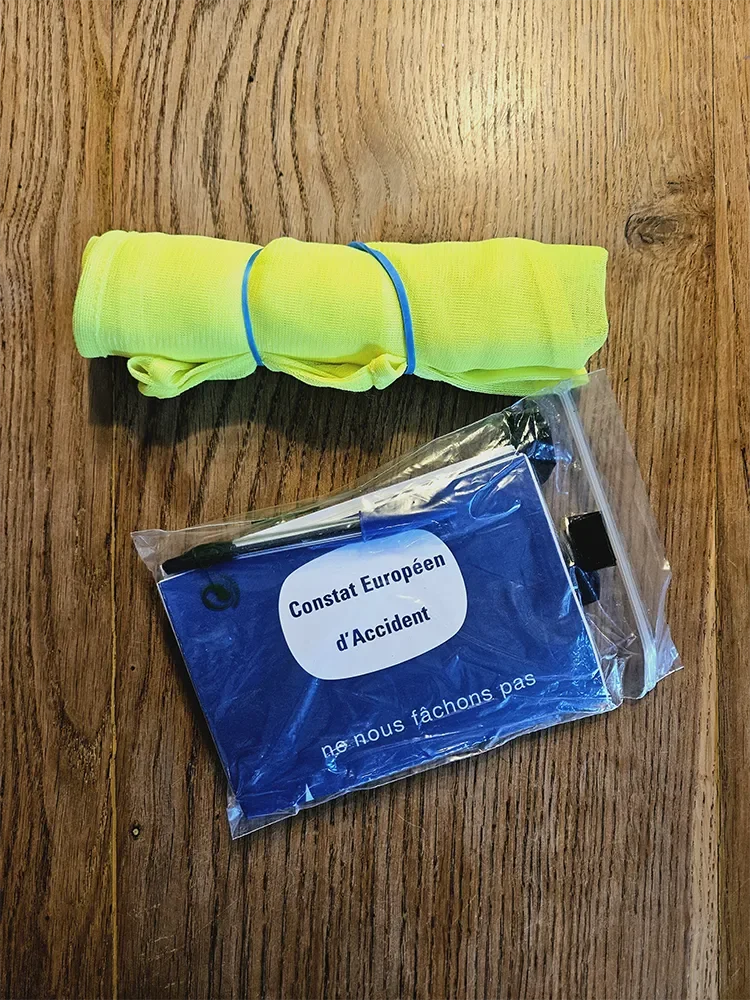
Every motorcycle ridden in France must be insured with at least third-party liability coverage. At a minimum, you must be able to present proof of insurance during a roadside check.
Failure to have valid insurance can lead to:
Significant fines
Licence suspension
Personal liability for damages
If you're hiring a motorcycle in France with our motorcycle hire option, full European cover is included in the rental price.
We strongly recommend that you have comprehensive travel and health insurance that includes coverage for motorcycling on public roads in Europe and for repatriation. The following companies offer comprehensive motorcycle insurance in Europe:
Top tip: If you are part of a Motorcycle Club or Association, you may already benefit from Motorcycle Insurance cover in Europe as part of your registration fee.
List of Documents to Carry When Riding a Motorcycle in Europe:
Knowing which documents to carry to ride a motorcycle legally in France can be confusing. Ensure you always have the following documents when riding a motorbike in France:
Valid, category A driving permit.
International driving permit, if applicable.
European Motorcycle Insurance.
Vehicle ownership documentation, or, in the case of rental, a photocopy of this document.
Passport (for crossing country borders)
Technical Inspections (Contrôle Technique)
As of April 15th 2024, a contrôle technique (or CT for short) - France’s roadworthiness test for vehicles - is now required for all French-plated motorbikes and scooters.
This means that all motorised two-wheeled, three-wheeled, or quadricycle vehicles registered in France now need to undergo a contrôle technique every three years. The new rule for CTs applies to all category L vehicles, including mopeds, motorcycles, scooters, motor tricycles, and light and heavy quadricycles.
Visitors and Foreign Riders
If you’re visiting France with a foreign licence, your EU licence is generally recognised. Riders from outside the EU may need an International Driving Permit (IDP) Category A, along with their home country driving licence — check before travel. Insurance requirements still apply.
For longer stays, including residency of more than one year, non-EU licences will need to be exchanged for a French licence through the ANTS (National Agency for Secure Documents).
Environmental & Noise Regulations
France is committed to reducing road pollution and noise. With this in mind, there are several features required for motorcycles to comply with French laws:
Bikes must have homologated exhaust systems that meet emission standards.
Excessive noise or modified exhausts can incur fines.
Some cities enforce Crit’Air environmental badges. Polluting vehicles may face restrictions or fines in low-emission zones.
All motorcycles offered for hire with Guide My Ride meet the required exhaust system and emissions standards. If you are booking a tour with your own motorcycle, please verify that it complies with French motorcycle Laws.
Motorcycle Safety Best Practices - a Recap
Even after you comply with all of the French motorcycle laws, there are several actions authorities recommend to ensure that your safety remains paramount:
✔ Wear full protective gear (not just required items)
✔ Regularly inspect brakes, lights, and tyres
✔ Never ride under the influence
✔ Take advanced safety courses
Remember! Good behaviour and practices reduce accidents and protect you and others on the road.
Summary - Key Takeaways on Motorcycle Laws in France For Riders
Licensing
Know your licence category (AM, A1, A2, A).
Mandatory Gear
Helmet, gloves, high-visibility vest, and safety equipment are required by law.
Road Rules
Obey speed limits, lane filtering conditions, and all road signs.
Insurance & Documents
Always carry your paperwork and valid insurance.
Penalties & Safety
Fines and point deductions are enforced strictly; prioritise safety gear and good behaviour.
Final Thoughts on Motorcycle Laws in France
France offers a thrilling and scenic environment for motorcyclists — with roads and culture that riders love. But to enjoy it fully, you must understand the legal framework governing motorcycle riding. From licences and protective gear to lane filtering and penalties, the laws aim to keep everyone safer and ensure harmony on the roads.
When booking one of Guide My Ride’s guided tours or our private motorcycle guiding service, we’ll have you covered so that you’re legally road-ready.
From our up-to-spec motorcycle hire service to daily safety briefings given by our experienced guide, Robyn, Guide My Ride tours help you stay informed, stay compliant, and, most importantly, ride responsibly whilst having the ride of your life!